Section 7.5 Omitting the else Clause: Unary Selection
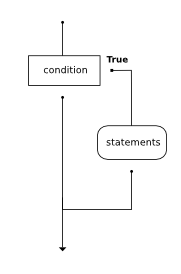
Another form of the if statement is one in which the else clause is omitted entirely. This creates what is sometimes called unary selection . In this case, when the condition evaluates to True , the statements are executed. Otherwise the flow of execution continues to the statement after the body of the if .
What would be printed if the value of x is negative? Try it.
Check your understanding
Checkpoint 7.5.2.
What does the following code print?
x = -10
if x < 0:
    print("The negative number ",  x, " is not valid here.")
print("This is always printed")
a.
This is always printed

b.
The negative number -10 is not valid here
This is always printed

c.
The negative number -10 is not valid here
Output a
Output b
Output c
It will cause an error because every if must have an else clause.
Checkpoint 7.5.3.
No
- Every else-block must have exactly one corresponding if-block. If you want to chain if-else statements together, you must use the else if construct, described in the chained conditionals section.
Yes
- This will cause an error because the second else-block is not attached to a corresponding if-block.
Will the following code cause an error?
x = -10
if x < 0:
    print("The negative number ",  x, " is not valid here.")
else:
    print(x, " is a positive number")
else:
    print("This is always printed")